Non-essential Prenatal Genetic Testing
A Step Back for Women, Minorities and the Poor
What kind of access should pregnant women have to pre-natal
genetic testing that is unrelated to diseases that are a likely indicator of an
immediate health concern for the mother or the child upon birth?
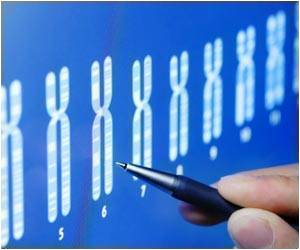

Prenatal genetic testing for traits that are not health concerns, such as intelligence, height or sex would turn child-bearing and pregnancy into a process where the outcome is a product (Rothman, 1987). Even with the limited prenatal testing that is done today, pregnancy has become a condition that medical doctors diagnose a woman with rather than the experience of feeling of life growing within that it once was (Samerski, 2009). Selecting for specific traits or purposely manipulating the genome to achieve a certain child would be like putting parts together in a factory. Women would no longer be integral to the experience of pregnancy but mere vehicles within which the product matures (Rothman, 1987). This is to say that to power afforded to pregnant women over their bodies, their womb and their fetuses would be reallocated to the medical community. Moreover, this specific prenatal testing seems to insinuate that if the amniocentesis shows a baby that does not meet the desired specifications, such as sex, it would be within reason to terminate it. The industrialization of pregnancy as outlined in genetic modification and prenatal testing for non-life threatening traits would turn both women and children into commodities and pregnancy into a means to an end rather than an experience.

The unknown harmful side effects of genetic modification or prenatal testing for specific traits on women and children outweigh any possible gain that these practices might have (Levine, 2002). Therefore, research and experimentation trying to produce these practices cannot be ethically be undertaken. Experimental medicine has historically had some grave effects on women and their children. When DES, was first introduced it was marketed as a drug that would help enhance the pregnancy. However, years later daughters of women of had taken DES showed high rates of cancer. The cloning of sheep provides another example of the destructive side effects that experimenting with the genome might bring to women and children. Dolly was one clone that managed to survive while countless others failed and yet she was subjected to advanced aging and other health difficulties early in life. Even taking a less drastic view and only looking at prenatal screening for specific traits that have not been genetically modified poses risks. As of today amniocenteses have a 1% chance of causing miscarriage (WebMD, 2002). It is unknown if this chance would increase with more extensive testing for traits that are much more complicated than Downs Syndrome or Tay Sachs. If that were the case, is there any reason that justifies carrying out such procedures if the traits that are being scanned for have no effect on the baby’s health? The degree of risk that accompanies experimental procedures involved in testing cannot outweigh the possible humanitarian positive outcomes, if there were any.

Genetic modification and prenatal testing for specific traits would not only be harmful to women, but it would increase the inequality between those of high socioeconomic status(SES) and those of low SES (Lippman, 1991). It has already been established that a predictor of whether prenatal care is received is SES. Women of low SES are much less likely to receive or seek out prenatal care even in Canada where prenatal care is covered by the government. This means that diseases, such as Down’s Syndrome which was previously not attached to any one specific class may become a condition linked with poverty due to the non-selection of Down’s in higher classes. Likewise, other traits may begin to become classed if they are beginning to be selected for through prenatal screening or built by genetic modification. As it is unlikely that insurance companies would pay for prenatal genetic testing that is only testing for traits that are not predictive of disease or medical problem, these services would only be available to the well-off. Depending upon the role that biological determinism actually plays in the outcome of an individual, genetic modification and prenatal testing could give anywhere from a small step up to an inherent superiority to those who can pay. As class, race and gender are not singular categories, but are continually intersecting prenatal genetic testing will further marginalize the poor, minorities and women.
Prenatal genetic screening for traits that are not indicative of a medical problem is essentially a more socially acceptable form of eugenics (Hubbard, 2002). Though it is more widely accepted for a fetus with Tay-Sachs to be aborted, aborting fetuses for other diseases and troubles is highly controversial. What sort of maladies or traits might be justifiable cause for an abortion if shown through prenatal testing? Whose idea of perfection should guide what fetuses get to live and what genetic modifications should be done? Many people living with disabilities feel as though their life is whole and worth living. Yet some supporters of extensive and selective prenatal testing would certainly describe these sorts of disabilities as preventable failures (Hubbard, 2002). There is no concrete list of desirable traits that would be applicable globally. What types of traits are valued are socially constructed and are often region or culture specific. Still, it is a dangerous idea to start actively trying to nurture some traits while stifling others. Groups of people who do not hold the highest social capital would not be selected for or would be aborted. Again this is frightening news for people with disabilities, minorities and maybe even women.
Prenatal genetic testing for non-life threatening traits and genetic modification are problematic for a host of reasons. Not only would pregnancy become industrialized and commodified, but these procedures would require experimental testing on women and children with potentially injurious or even fatal side effects. Genetic modification and prenatal screening could serve as another way that the inequality between the privileged and the non-privileged could be heightened. Finally, these practices could serve as a modern eugenics movement that would be strongly biased towards certain groups more than others. The need for and the drive for processes such as genetic modification and testing for traits not related to medical emergencies shows the way that Western society is obsessed with reaching some sort of subjective ideal (Lippman, 1991). It seeks to take the traits that are perceived to be valuable while discarding those that are perceived to be a detriment to society. Instead of trying to change humans to fit the perfectionist societal view of superficial traits, society should work to become more inclusive and accepting of diversity. In the interim all efforts should be made to stop access to and possibly even the development of prenatal screening that test for superficial traits and genetic modification procedures.

Works Cited
Hubbard, Ruth, and Stuart Newman. "Yuppie Eugenics: Creating A World of Genetic Have and Have-Nots." Z Magazine. Mar. 2002. Web. 2 May 2012. <http://www.zcommunications.org/yuppie-eugenics-by-ruth-hubbard-and-stuart-newman>.
Jongsma, Jennifer. "The DNA Files." Prenatal Genetic Testing. 2007. Web. 02 May 2012. <http://www.dnafiles.org/programs/prenatal-genetic-testing>.
Levine, Judith. "What Human Genetic Modification Means For WOmen." World Watch July/August (2002). Print.
Lippman, Abby. "Prenatal Genetic Testing and Screening:Constructing Needs and Reinforcing Inequalities." American Journal of Law & Medicine 17 (1991). Print.
Rothman, B. K. "COMMENT ON HARRISON:: The Commodification of Motherhood." Gender & Society 1.3 (1987): 312-16. Print.
Samerski, Silja. "Genetic Counseling and the Fiction of Choice: Taught Self‐Determination as a New Technique of Social Engineering." Signs: Journal of Women in Culture and Society 34.4 (2009): 735-61. Print.
Posted by Quincy Lacwasan

No comments:
Post a Comment